How to Make Fluffy Homemade Dinner Rolls From Scratch
Soft, airy dinner rolls are a staple on many tables, whether for holiday gatherings or simple weekday meals. Achieving a consistently light texture and maintaining freshness beyond the first day, however, often requires more than just a standard dough. One technique that has gained popularity among home bakers is the tangzhong method, a pre-cooked paste made from flour and liquid that helps the dough retain moisture and produce a remarkably tender crumb. This article explores the principles behind this approach and provides a detailed process for making fluffy homemade dinner rolls from scratch.
The tangzhong method originates from Asian baking traditions and is sometimes referred to as a water roux. By gelatinizing a portion of the flour with liquid before incorporating it into the final dough, the starches absorb more water and hold onto it throughout the baking and cooling stages. This results in rolls that stay soft longer and have a fine, almost pillowy interior. While the method adds an extra step, it is straightforward and requires only basic ingredients and equipment. The following sections outline each stage of the process, from preparing the tangzhong to shaping and baking the rolls.
The Tangzhong Method Explained
The tangzhong method relies on the principle of starch gelatinization. When flour and water (or milk) are heated together, the starch granules swell and absorb liquid, forming a thick paste. This paste is then added to the remaining dough ingredients, increasing the overall hydration of the dough without making it overly sticky. The extra moisture is trapped within the dough structure, so during baking, steam is released gradually, contributing to a softer crumb.
Another advantage of this method is that it can extend the shelf life of baked goods. Because the starches retain moisture, the rolls do not dry out as quickly as those made with a direct dough method. Many commercial bakeries use similar techniques, but the tangzhong approach is easily adapted for home use. It works well with various types of flour, though all-purpose flour is commonly used for dinner rolls. The preparation time is minimal, usually under five minutes, and the paste can be made ahead and refrigerated if needed.
Key Ingredients for Soft Rolls
A standard dinner roll recipe typically includes flour, milk, butter, sugar, yeast, salt, and eggs. For the tangzhong method, a small portion of the flour and liquid is reserved to make the paste. The remaining ingredients follow conventional proportions. Bread flour can be used for a chewier texture, but all-purpose flour yields a softer result that many prefer for dinner rolls. Milk contributes to tenderness and browning, while butter adds richness and flavor.
Yeast is a critical component; active dry yeast or instant yeast both work, though instant yeast can be mixed directly with the dry ingredients. Sugar provides food for the yeast and aids in browning. Salt controls fermentation and strengthens the dough structure. Eggs add enrichment and help create a delicate crumb. The inclusion of tangzhong allows for a slightly higher ratio of liquid without making the dough difficult to handle, which is why these rolls remain soft even after cooling.
Preparing the Tangzhong
To make the tangzhong, a small amount of flour is combined with water or milk in a saucepan. The typical ratio is one part flour to five parts liquid by weight. For a standard batch of rolls, this might be about two tablespoons of flour and half a cup of liquid. The mixture is whisked over medium heat until it thickens into a paste, usually within two to three minutes. Once the paste reaches a temperature around 65°C (149°F), the starches have gelatinized, and the mixture is removed from the heat. It is then allowed to cool to room temperature before being added to the dough.
Cooling the tangzhong is important because adding a hot paste to the other ingredients can kill the yeast or interfere with gluten development. Some bakers prepare the tangzhong the night before and store it covered in the refrigerator. This can streamline the process and fits well into a make-ahead schedule. The cooled paste should have a pudding-like consistency and can be gently mashed with a spoon if any lumps formed during cooking.
Mixing and Kneading the Dough
Once the tangzhong is cool, the remaining dough ingredients are combined. In a large mixing bowl, the flour, sugar, instant yeast, and salt are whisked together. Milk, melted butter, eggs, and the cooled tangzhong are added, and the mixture is stirred until a shaggy dough forms. Kneading can be done by hand on a lightly floured surface or using a stand mixer fitted with a dough hook. For hand kneading, the dough is worked for about eight to ten minutes until it becomes smooth and elastic. Using a reliable mixing bowl, such as those offered by Kitchen Craft, can assist in the kneading process by providing a stable base and even heat distribution.
The dough should pass the windowpane test: a small piece stretched thin becomes translucent without tearing. At this point, the dough is placed in a lightly oiled bowl, covered, and left to rise in a warm, draft-free area. The first proofing typically takes about one to two hours, depending on ambient temperature, and the dough should double in volume. The tangzhong method does not significantly alter fermentation time, so standard proofing guidelines apply.
Shaping and Proofing
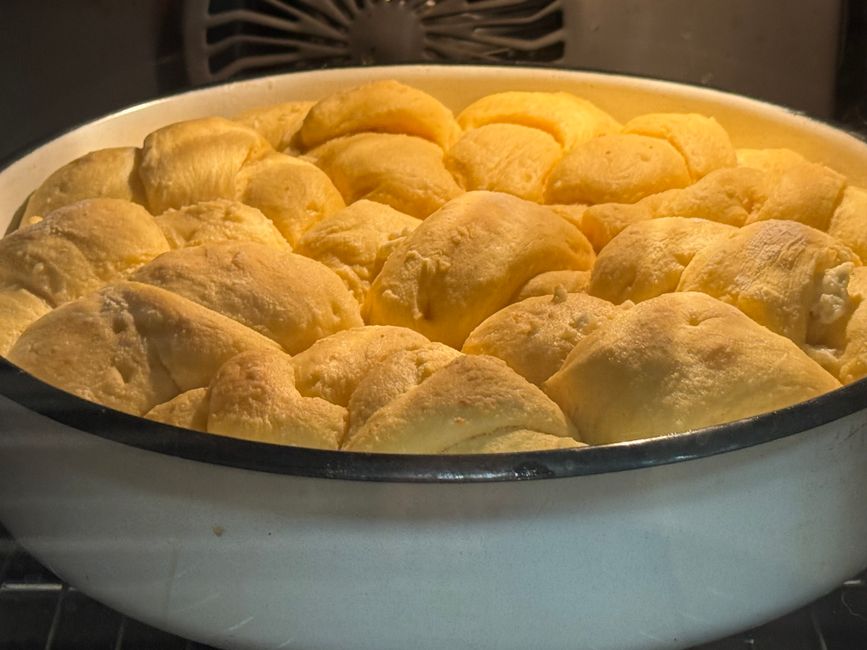
After the first rise, the dough is gently deflated and turned out onto a clean surface. It is divided into equal portions, usually twelve to sixteen rolls, depending on the desired size. Each portion is shaped into a smooth ball by pulling the edges toward the center and rolling it on the surface with a cupped hand. The shaped rolls are arranged in a greased baking dish or on a parchment-lined baking sheet, leaving a small space between them for expansion.
A second proofing allows the rolls to become puffy and light. This stage typically lasts thirty to forty-five minutes, during which the rolls should nearly double in size. They are then brushed with an egg wash or melted butter to encourage golden browning. The oven is preheated to a temperature around 350°F (175°C), and the rolls are baked for eighteen to twenty-two minutes, or until the tops are deep golden and the internal temperature reaches about 190°F (88°C).
Once removed from the oven, the rolls are transferred to a wire rack to cool slightly. Brushing them with additional butter immediately after baking adds a soft crust and a glossy finish. The rolls are best served warm, but they can be stored in an airtight container at room temperature for up to three days. Because of the tangzhong, reheating briefly in the oven helps restore their freshly baked texture.
Baking and Storage Tips
While the tangzhong method helps maintain moisture, proper storage still plays a role in preserving softness. Rolls should be kept in a sealed container or wrapped tightly in plastic wrap after they have cooled completely. If humidity is high, a paper towel can be placed inside the container to absorb excess moisture and prevent the rolls from becoming soggy. Reheating in a low oven (about 300°F or 150°C) for five to ten minutes revives the soft texture without drying them out.
For longer storage, the baked rolls can be frozen. They are placed in a freezer-safe bag, with excess air removed, and can be kept for up to three months. Reheating from frozen requires a few extra minutes in the oven. The tangzhong method ensures that even after freezing, the rolls retain a pleasant tenderness and do not develop the dry, crumbly texture often seen in frozen bread products.
The entire process, from preparing the tangzhong to serving the rolls, takes around three to four hours, including rising and baking times. Most of this time is hands-off, allowing the baker to attend to other meal preparations. By incorporating a simple technique, the final outcome is a batch of dinner rolls that are consistently fluffy, slightly sweet, and satisfyingly soft. These rolls complement a wide range of dishes and can become a reliable part of any home baker’s repertoire.