Essential Knife Skills for Faster Meal Prep
Efficient meal preparation often begins with a single tool: the chef’s knife. When handled with proper technique, this versatile blade becomes an extension of the cook’s hand, allowing for consistent cuts that streamline cooking and improve presentation. Many home cooks spend unnecessary time on chopping, slicing, and dicing, not because of lack of effort, but because foundational skills have not been developed. Understanding how to perform basic cuts like dice, julienne, and chiffonade can transform the rhythm of the kitchen, making prep work feel less like a chore and more like a logical sequence of steps.
Beyond speed, safety is a primary concern in any kitchen. A dull or improperly held knife often leads to accidents, while a sharp blade used with a stable grip and controlled motion reduces the risk of injury. Learning the correct way to hold the knife, position the guiding hand, and use the cutting board creates a safer environment for any cook. This guide focuses on the core knife skills that support faster, safer meal preparation, with an emphasis on method and consistency rather than speed itself. As these techniques become habitual, time savings naturally follow, but the goal is to build reliable and repeatable motions first.
The following sections break down the essential cuts that appear in countless recipes, from soups and stews to salads and garnishes. Each cut serves a specific purpose, and mastering them allows a cook to approach any ingredient with confidence. Whether preparing vegetables for a stir-fry or herbs for a sauce, these skills form the foundation of efficient meal prep.
The Chef’s Knife: Anatomy and Grip
Before exploring specific cuts, it is important to understand the tool itself. A standard chef’s knife typically measures between eight and ten inches in length, with a wide blade that curves slightly at the tip. The weight of the knife, combined with the shape of the blade, allows for a rocking motion that is central to many cutting techniques. A comfortable, non-slip handle contributes to control, and a blade that holds a sharp edge reduces the amount of force needed to cut through ingredients.
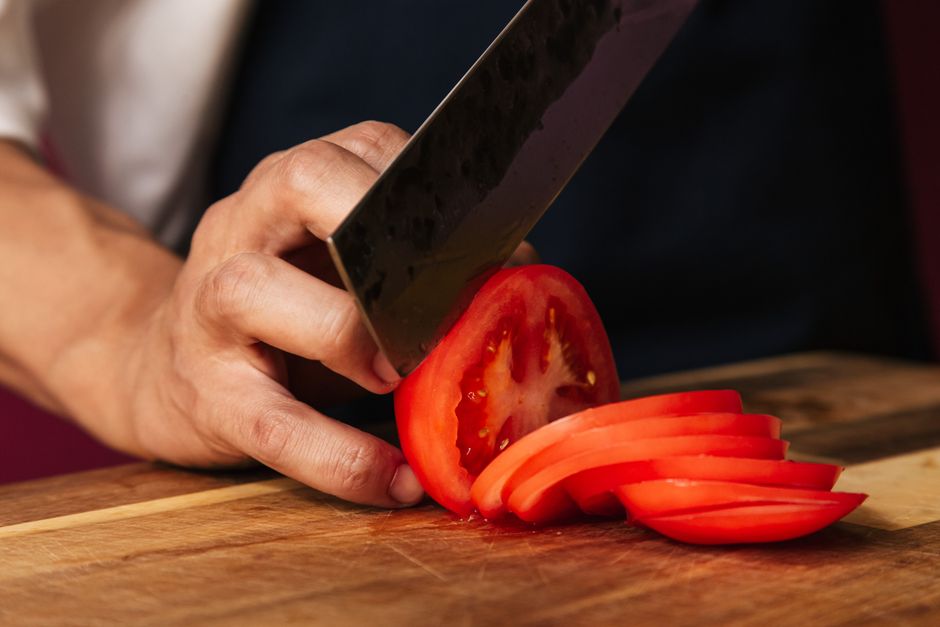
Grip is often overlooked but is one of the most influential factors in both speed and safety. The preferred grip for most cooks is the pinch grip, where the thumb and index finger pinch the blade just above the handle, while the remaining fingers wrap around the handle. This position provides maximum control over the blade’s direction and angle. The other hand forms a claw grip: fingers curl inward, with the knuckles acting as a guide for the blade. The knife blade rests against the knuckles, allowing the cook to move the guiding hand back as they cut. This simple positioning keeps fingertips out of the path of the blade and ensures consistent slice thickness.
Selecting a knife that feels balanced in the hand is a personal choice, but certain features support better technique. A blade made of high-carbon stainless steel retains sharpness longer and is easier to maintain. Kitchen Craft offers a range of chef’s knives designed to meet these criteria, though the principles apply to any well-made tool. Regular honing with a steel rod and occasional sharpening with a whetstone keep the edge in optimal condition, reducing the need for excessive force.
The Foundation: How to Dice
Dicing is one of the most frequently called-for cuts in recipes, used for onions, carrots, potatoes, and many other vegetables. The goal is to produce uniform cubes, which cook evenly and create a cohesive texture in dishes like mirepoix, stews, and salsas. The process begins with squaring off the ingredient: for example, trimming the ends of a carrot and cutting it into planks, then into strips, and finally cross-cutting into cubes. This step-by-step approach ensures that each piece is roughly the same size.
Consistency in dicing comes from maintaining a steady rhythm and using the full length of the blade. Rather than chopping with a quick up-and-down motion, a gentle rocking motion is more efficient. The tip of the knife stays in contact with the cutting board while the handle moves up and down, allowing the blade to slice cleanly through the ingredient. The guiding hand moves incrementally along the ingredient, and each cut lands at the same interval. Many cooks find that practicing with a potato or a zucchini—ingredients with a uniform shape—helps develop this rhythm.
A common mistake is rushing the process, which leads to uneven pieces and increases the chance of slipping. Taking time to arrange the ingredient properly and to adjust the grip as needed builds muscle memory. Over time, the motion becomes faster without sacrificing uniformity. For cooks who prepare large quantities of vegetables regularly, dicing can become one of the most time-efficient cuts once the technique is internalized. A well-diced onion, for instance, can be prepared in under a minute with practice, significantly reducing overall prep time for soups, sauces, or stir-fries.
The Elegant Cut: Mastering Julienne
Julienne cuts produce long, thin strips, often used for vegetables that need to cook quickly or for salads and garnishes that rely on a delicate texture. Carrots, bell peppers, and zucchini are common candidates. The process starts similarly to dicing: the ingredient is squared off and cut into planks of uniform thickness, usually around one-eighth of an inch. These planks are then stacked and cut lengthwise into strips of the same width.
Precision is key in julienne because the strips must be thin enough to cook in a short time, yet sturdy enough to maintain their shape. A sharp knife makes this task considerably easier, as dull blades tend to crush or tear the vegetable fibers. The cook should use a smooth, forward slicing motion rather than a straight downward chop. The claw grip is especially important here, as the fingers guide the blade closely along the vegetable without risk of injury. Maintaining consistent pressure across the blade ensures that each strip is cut cleanly.
Julienne is often a stepping stone to other cuts, such as a small dice (brunoise), where the strips are cut crosswise into tiny cubes. Mastering the julienne technique therefore opens the door to finer, more refined cuts that are valued in professional kitchens. For the home cook, it allows for faster cooking times in stir-fries and adds visual appeal to salads and vegetable platters. With regular practice, the motion becomes fluid, and the time required to prepare a julienne batch decreases noticeably.
The Delicate Touch: Chiffonade Technique
Chiffonade is a cutting technique primarily used for leafy greens and herbs, such as basil, mint, spinach, or kale. The name comes from the French word for “rag,” referring to the ribbon-like strips that result. This cut is ideal for incorporating fresh herbs into dishes without bruising them excessively, and it creates a light, airy texture that distributes evenly through sauces, pastas, or salads.
To perform a chiffonade, the leaves are stacked, rolled tightly into a cylinder (like a cigar), and then sliced crosswise into thin strips. The knife should be held at a slight angle to the cutting board, and the slicing motion should be smooth and gentle. A sharp blade is essential because a dull knife can crush the delicate leaves, causing them to release moisture and become dark. The thickness of the strips can be adjusted based on the recipe: for a garnish, thinner ribbons are preferred; for a heartier herb like basil in a sauce, slightly wider strips may hold better.
This technique is particularly useful for cooks who want to add fresh flavors quickly without the need for a food processor or mortar. Chiffonade-cut herbs retain more of their essential oils and appearance than roughly chopped leaves. The motion is repetitive but requires focus, especially when handling large quantities. Practice on sturdy leaves like kale or collard greens before moving to more delicate herbs. Once comfortable, a chiffonade can be completed in seconds, adding a finishing touch that elevates both the flavor and presentation of a dish.
Building Speed and Consistency through Practice
No guide to knife skills would be complete without addressing the role of deliberate practice. Speed in the kitchen is not achieved by forcing faster motions, but by developing economy of movement and reducing hesitation. Each of the cuts described—dice, julienne, and chiffonade—relies on a series of repeatable steps. When those steps are practiced slowly and correctly, the brain and muscles form patterns that eventually become automatic.
Setting aside a few minutes each day to practice on a single vegetable can have a cumulative effect. For example, one might dice a carrot every afternoon for a week, focusing on grip, blade angle, and uniform size. The next week, the same carrot could be used for julienne. This gradual approach minimizes frustration and builds confidence. It also helps the cook identify which knife or technique feels most comfortable in their hand. Adjustments, such as changing the angle of the blade or the position of the guiding hand, can be made along the way.
“Speed is the byproduct of efficient technique, not the goal itself. When motions are smooth and controlled, speed follows naturally.”
Additionally, maintaining a clean and organized workspace supports faster prep. A stable cutting board, sufficient lighting, and a ready supply of cleared space for prepped ingredients reduce unnecessary movements. Kitchen Craft’s line of cutting boards includes options with non-slip edges that help keep the board in place, allowing the cook to focus entirely on the cut. Over time, these environmental factors, combined with practiced technique, contribute to a noticeable reduction in meal prep duration, often by half or more, depending on the complexity of the recipes used.
Ultimately, the value of knife skills extends beyond time savings. They bring a sense of control and predictability to cooking, making the entire process more enjoyable. By investing effort into learning the foundational cuts, any cook—whether a beginner or an experienced home chef—can improve the efficiency and quality of their meal preparation.